

The One Learning Technique That Actually Works: Comprehensible Input
Comprehensible Input is a simple but powerful learning technique where you learn best by understanding slightly challenging content. This article explains what it is, why it works, and how you can use it to learn faster without stress.
Learning something new often feels hard. Many people try to learn by memorizing facts, forcing themselves to study for hours, or watching complex content they barely understand. After some time, they feel tired, confused, and frustrated.
But what if learning didn’t have to feel that way?
There is one learning technique that actually works for almost everyone. It is simple, natural, and backed by research. This technique is called Comprehensible Input.
What Is Comprehensible Input?
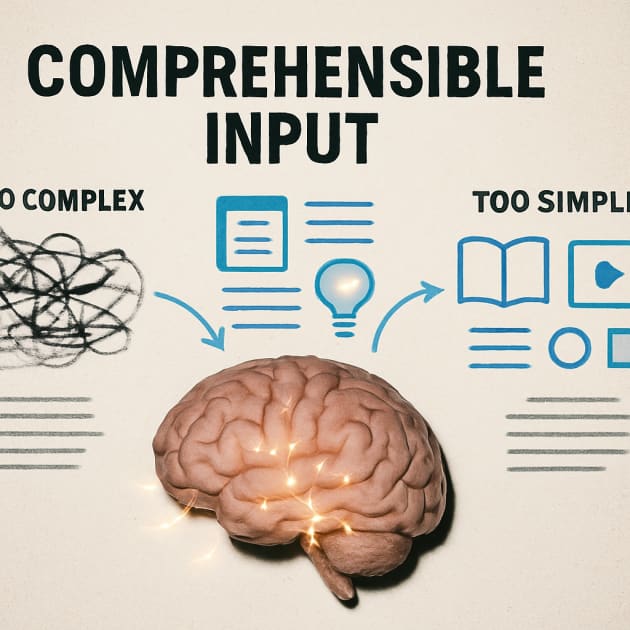
Comprehensible Input means learning from content that you can mostly understand, even if it is slightly above your current level. You don’t need to understand everything perfectly. You just need to understand enough to follow along.
- If the content is too easy, you get bored.
- If the content is too hard, you get lost.
- But if the content is just a little challenging, your brain starts learning naturally.
- This idea was popularized by language expert Stephen Krashen, but it applies to all types of learning, not just languages.
Why This Learning Technique Works
Your brain learns best when it feels safe and relaxed. When you try to force learning through pressure or fear, your brain resists. Comprehensible Input works because it matches how humans naturally learn from childhood.
When children learn to speak, they don’t study grammar books. They listen. They observe. They understand a little more each day. Over time, their brain connects patterns without effort.
- Your brain recognizes patterns on its own
- Learning feels natural, not forced
- You remember more without memorizing
This is why people often learn more from watching understandable videos, reading simple explanations, or listening to clear podcasts than from heavy textbooks.
What Comprehensible Input Looks Like in Real Life
- Reading an article where you understand about 80–90% of the words
- Watching a video where the speaker explains things slowly and clearly
- Listening to a podcast that feels slightly challenging but not confusing
- Learning coding concepts through simple examples instead of complex theory
You may not understand every detail at first, and that’s okay. Over time, your understanding grows naturally.
What You Should Avoid
- Jumping into advanced material too early
- Memorizing without understanding
- Studying in a way that feels stressful or boring
If you constantly feel stuck, tired, or overwhelmed, it’s a sign that the input is not comprehensible.
How to Use Comprehensible Input Daily
- Choose content slightly above your level — not beginner, not expert.
- Focus on understanding, not perfection — let your brain adjust.
- Repeat exposure — seeing ideas again helps learning stick.
- Enjoy the process — interest accelerates learning.
Why This Is the Only Technique You Need
Many learning methods exist, but most of them still rely on one thing: input. Without understandable input, no method works well.
- Strong foundations
- Long-term memory
- Real understanding
This technique works for learning languages, technology, history, science, and even thinking skills.
Learning doesn’t need to be painful. You don’t need to be “smart” or “talented” to learn well. You just need the right kind of input.
When you give your brain content it can understand and enjoy, learning happens on its own—slowly, naturally, and effectively.
Learning improves when understanding comes first. That is the power of Comprehensible Input.